The decisive first step is establishing the composition based on the principle of proportion, specifically the philosophy of asymmetry often found in East Asian art, where the elements Heaven – Earth – Man are represented by three main flower stems. To begin, you must select the Main Stem (Heaven) – this is the tallest stem, which must establish the dominant line, and its height should typically be about $1.5$ times the height or length of the vase you are using. Next, the Secondary Stem (Man) should be trimmed to about $2/3$ the height of the main stem, and the Third Stem (Earth) will be the shortest, only about $1/3$ the height of the main stem, used to create stability and balance at the base. Adhering to these proportions from the start not only creates a harmonious framework but also helps the piece escape the monotony of an overly symmetrical arrangement, bringing a more artistic feel.
The strongest appeal of the minimalist style lies in honoring Negative Space. Unlike Western floral styles that often fill every void, here, we must learn to let negative space function as an essential design element equal to the physical object. The goal is to highlight the natural lines of each flower stem, so restrain the urge to overcrowd: use a maximum of 3 to 5 stems. The core principle is to ensure each flower has its own "breathing room," strictly avoiding stems touching, intertwining, or obscuring one another. When arranging, experiment by slightly adjusting the angle—usually 10 to 15 degrees of lean—instead of trying to place them perfectly upright. This slight tilt creates delicacy, subtle movement, and adds depth to your arrangement.
Once the composition is set and negative space is established, it's time to introduce the Focal Point to draw the eye. Seek out unique characteristics: it might be a bud just starting to open, a stem with a slight, irregular curve, or the most vibrant color among your chosen stems. This focal point does not need to be centered; you can place it slightly forward or backward relative to the other two stems to create visual intrigue and depth. Finally, an indispensable step is to rotate the vase 360 degrees. This allows you to perform a final check and adjustment to ensure that your artwork is not only beautiful from one side but also maintains a balanced, harmonious, and captivating composition from any angle the viewer approaches it.
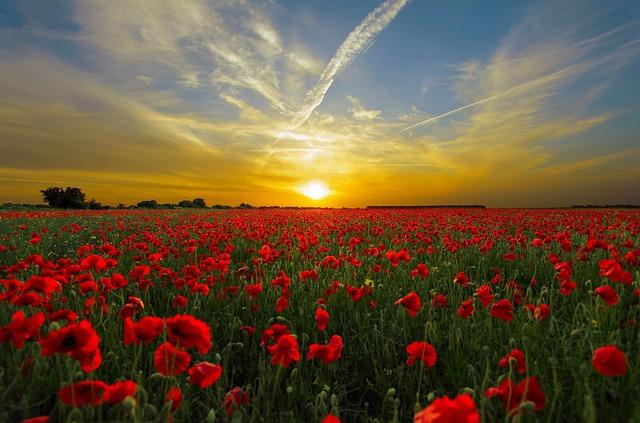



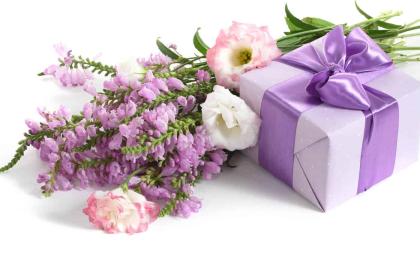
Explore the profound meaning and cultural origins of flowers specifically designated for Mothers on special occasions....
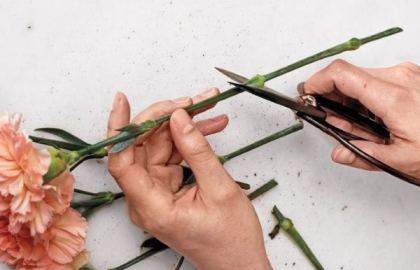
A guide on how to transform ordinary silk flowers into soulful works of art that look...
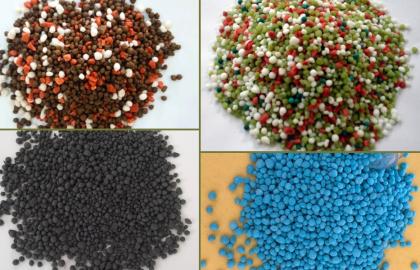
A guide to making organic fertilizer at home using easily accessible ingredients like eggshells, coffee grounds,...